Apple Business Essentials
Designing the product model for a zero-to-one device management platform
Problem
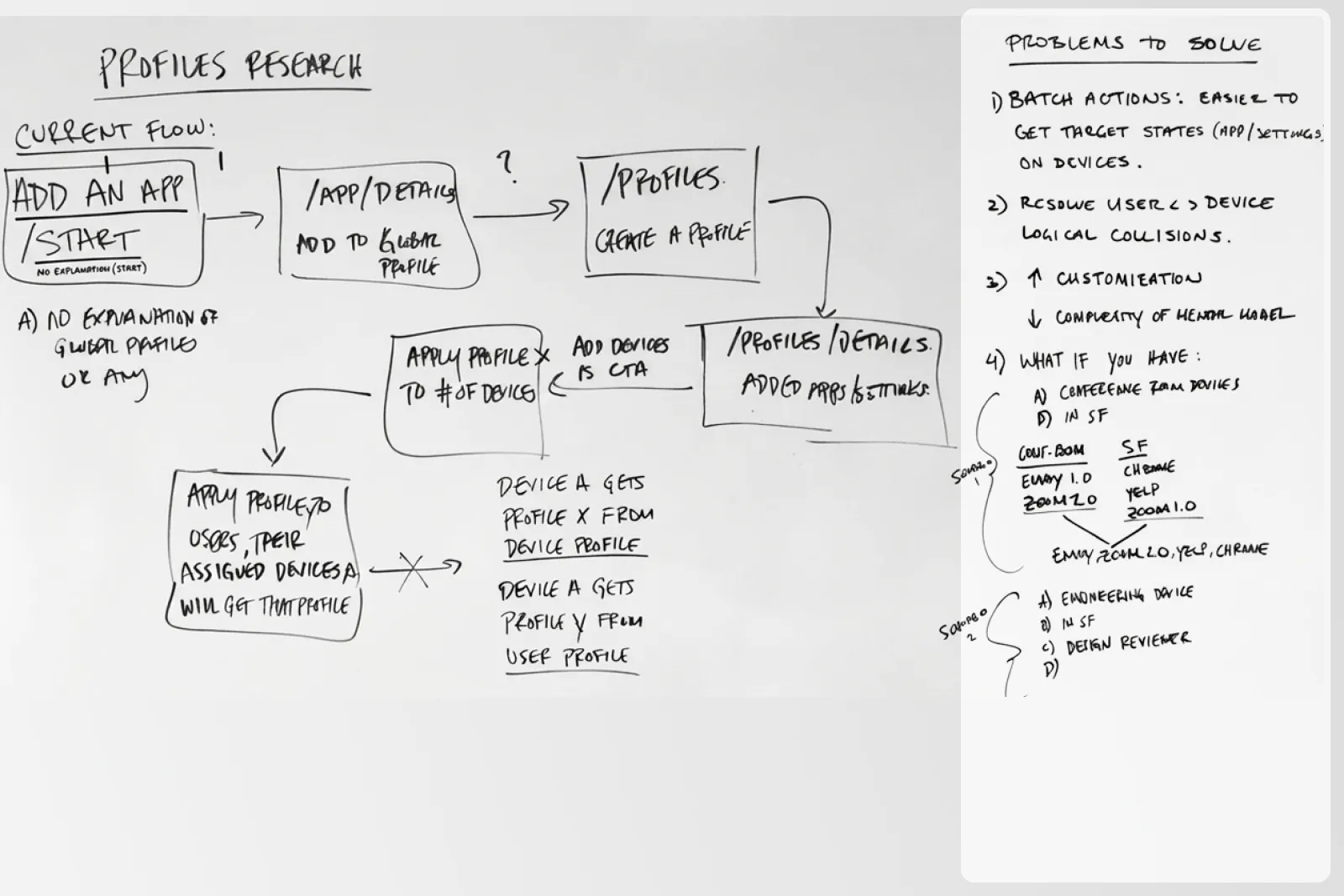
Fleetsmith helped organizations manage apps, settings, and policies across their devices. The product pushed configuration profiles directly to devices, but this model began to break down as customers scaled. Employees often owned multiple devices. Shared resources such as conference rooms and kiosk iPads didn’t fit neatly into a user-centric model. Administrators increasingly wanted to manage technology through concepts like apps for specific teams, office locations, and employee lifecycle stages.
Internally, we faced a fundamental product question: should the future of device management be organized around users, locations, devices, or something else entirely? The challenge was uncovering the right abstraction for how organizations manage technology at scale.
Role & scope
I led the design of this zero-to-one platform, from the foundational product model through the early product experience. I partnered with a product manager who later saw the work through to launch at Apple, and worked closely with the founders and engineering. The work spanned customer research, systems modeling, information architecture, and the product flows and concepts that brought the model to life.
Approach
Resolving conflicting signals
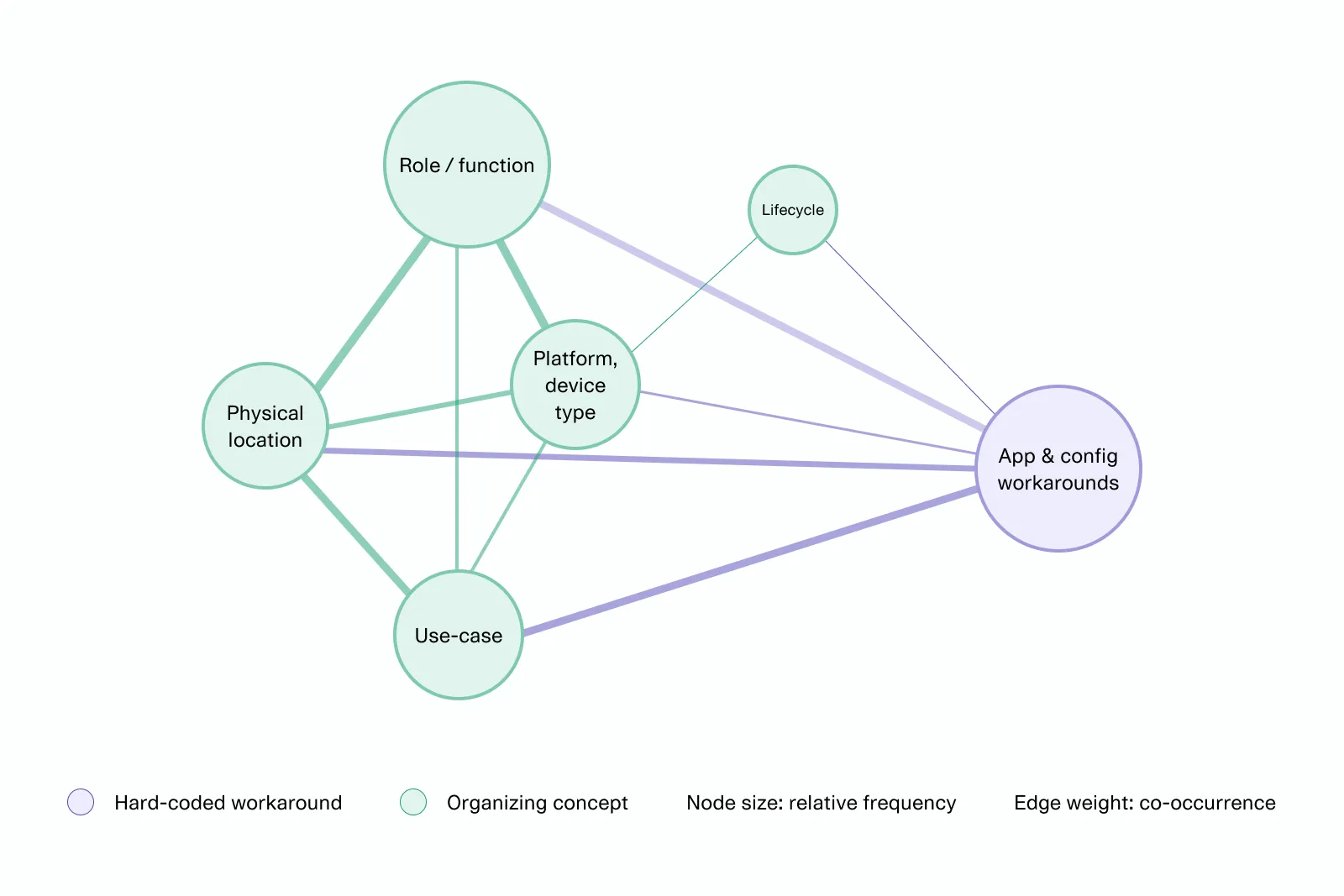
Customer interview feedback pointed in several directions, with some administrators wanting to manage devices by user, others by location or device type. To supplement this feedback, I looked at product usage, analyzing around 200 configuration setups to see how customers actually organized and named their environments.
The custom labels were distributed across several dimensions: user roles and functions, physical locations and shared spaces, device platforms, and functional use cases. Network analysis revealed that many customers used both user-centric and location-centric profiles, often combined with profiles indicating exceptions and one-off rules. This was a sign that customers were working around a system that was too rigid to express how they actually operated, and that the product needed a more flexible way to represent groupings of people and devices.
Designing the abstraction
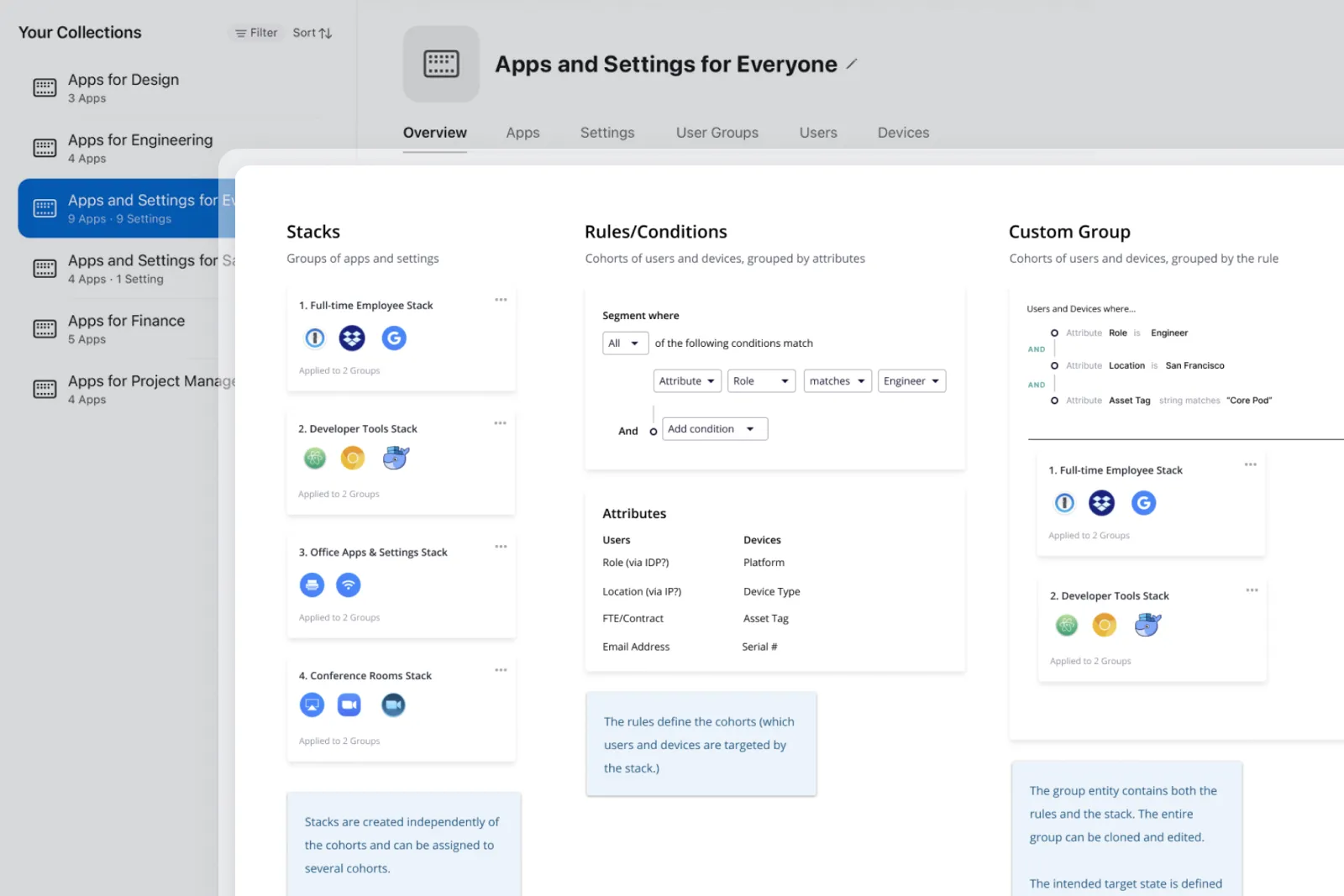
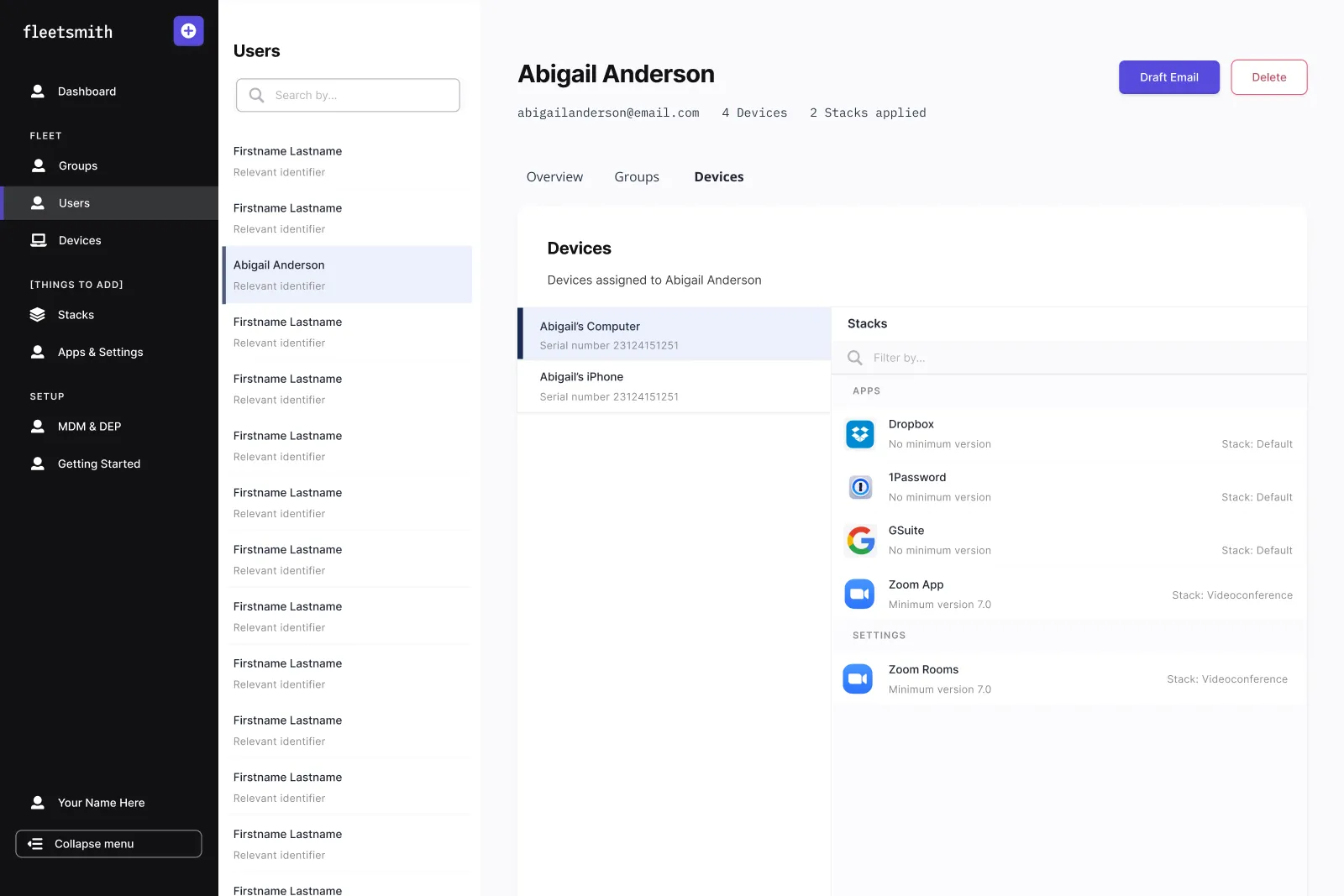
To provide customers with the flexibility they needed, I proposed separating configuration from targeting. The first half was the Stack: a reusable collection of apps and settings that defined a desired state. The second half was the Group: a deliberately unopinionated container flexible enough to represent any collection of people or devices, whether a customer reasoned in terms of roles, locations, rooms, platforms, or use cases. The two became powerful in combination: rather than one profile overriding the last, multiple stacks applied to a group additively, with conflicts surfaced and reconciled rather than silently replaced. This would let organizations combine concerns like role, location, and resource type without rigid hierarchies, duplicated configuration, or a brittle single target state. I refined this model with engineering and product, and designed the early product experience around it: the flows and concepts for how administrators would create stacks, build groups, and apply configuration across their fleet.
Outcome
The model became the foundation for Fleetsmith’s next-generation management experience and resolved a fundamental strategy question about how organizations should be represented within the system.
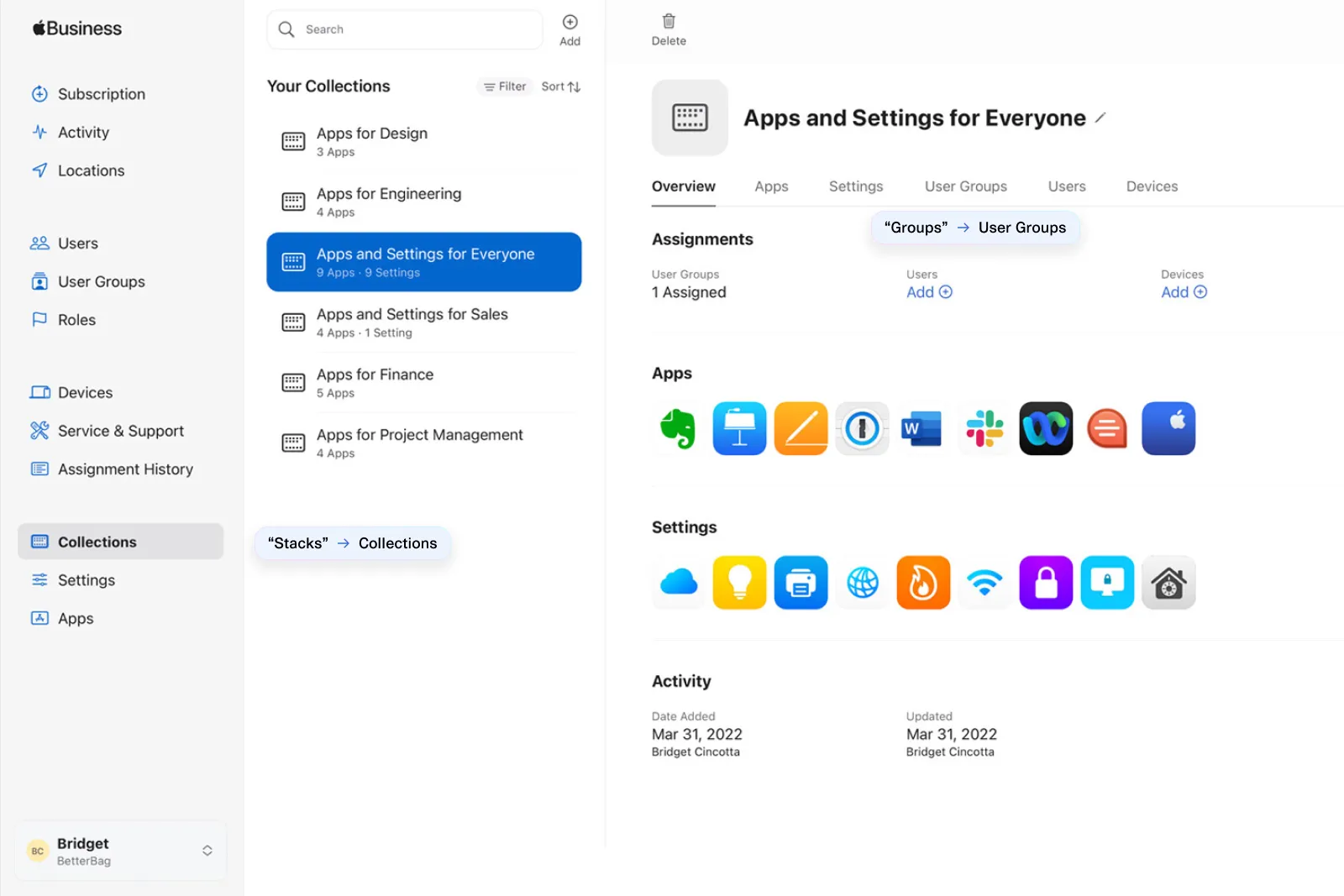
It also proved durable. Following Apple’s acquisition of Fleetsmith, the model shipped in Apple Business Essentials. Stacks became Collections and Groups became User Groups, but the underlying structure was intact: reusable configurations assigned independently from the people, devices, and resources that receive them. It survived because it reflected how organizations actually understand themselves.